About Us

Trustees

Policyholders

Purposeful investments

Sustainability

Investors

New & insight

About Us
Trustees
Policyholders
Purposeful investments
Sustainability
Investors
New & insight
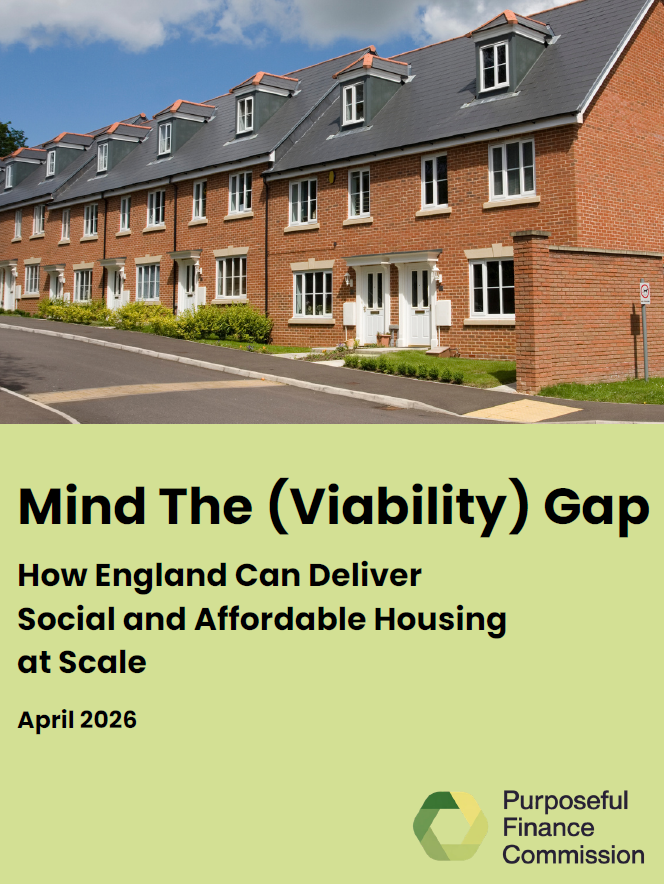
New research from the Purposeful Finance Commission (PFC), led by Pension Insurance Corporation, Wates Group, and igloo Regeneration, has identified a series of structural barriers that will need to be addressed if the government's social and affordable housing ambitions are to be realised. With just over 10,000 social homes being built annually against a waiting list of 1.3 million households, the report sets out practical steps to help ensure the government's £39 billion Social and Affordable Homes Programme delivers at the scale intended.
The PFC’s latest report, Mind the (Viability) Gap is the result of months of interviews with investors, local government, developers, housing associations, and academics, which ended with a sector wide roundtable last December. The research finds longstanding issues with regulation, financing, land availability, and consultations have all contributed to a widening viability gap in the social and affordable housing sector. As well as highlighting the issues, the PFC - in consultation with the sector – sets out practical recommendations that could meaningfully boost the supply of good quality social and affordable homes.
 (Click to download)
Dom Veney, Chair of the Purposeful Finance Commission and Interim CEO, Pension Insurance Corporation said:
"More than 1.3 million households are on social housing waiting lists, yet we're only building around 10,000 new social homes a year. At the heart of this failure is the viability gap – the difference between what it costs to build social and affordable housing and what the revenues can ever support. Until we close that gap, we will keep converting good intentions into poorer delivery outcomes. These reforms are about making the system work - aligning incentives, reducing unnecessary delay, and turning institutional capital into homes that last."
Stephen Beechey, Group Public Sector Director at Wates Group, said:
“This research is a timely and practical intervention in the debate on social housing delivery. Everyone across the sector recognises the scale of ambition, but too often good intentions are undermined by a system that makes schemes unviable before they even reach site.
“What the Purposeful Finance Commission has set out is a credible roadmap for closing the viability gap – addressing land, regulation, infrastructure and delivery in the round. From our experience delivering social and affordable housing across the country, earlier coordination, clearer accountability and a stronger focus on whole‑life value are essential if public investment is to translate into homes at the scale and quality communities need.”
John Long, Development Director at igloo Regeneration said:
“This is a landmark piece of research that will be instrumental as we enter the next stage of delivering vital housing across the UK. At igloo, we have long championed building on brownfield land that would otherwise be unviable, so the actions that the Government has taken with new delivery vehicles such as Platform 4 is a real step forward.
"However, these initiatives must be paired with meaningful collaboration between the public and private sector, alongside community engagement to ensure that we are not just delivering houses, but creating thriving neighbourhoods that are valuable for people, place and planet.”
Notes to Editors
Chelsey Wheeler
Public Relations – Senior Manager
Wheeler@pensioncorporation.com
07586686414
About PIC
The purpose of PIC is to pay the pensions of its current and future policyholders. PIC provides secure retirement incomes through comprehensive risk management and excellence in asset and liability management, as well as exceptional customer service. At full year 2025, PIC had insured 438,000 pension scheme members and had £54.8 billion in financial investments, accumulated through the provision of tailored pension insurance buyouts and buy-ins to the trustees and sponsors of UK defined benefit pension schemes. At 31 December 2025, PIC had made total pension payments of £19.3 billion to its policyholders and had invested more than £15 billion in the UK economy, creating considerable social value. Clients include FTSE 100 companies, multinationals and the public sector. PIC is authorised by the Prudential Regulation Authority and regulated by the Financial Conduct Authority and Prudential Regulation Authority (FRN 454345). For further information please visit www.pensioncorporation.com